
![]() |
|
![]() | ![]() |
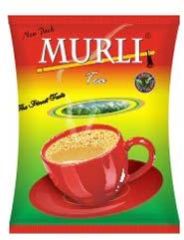
The product and services of the company has always been associated with high quality and standard. Our Teas are available in different range and specification like CTC tea, green tea, organic tea, orthodox tea, instant tea, tea bags, herbal tea, and sugar free tea and so on. These teas are accessible in the brand name of Murli like Murli Tea, Murli Gold Tea, Murli Premium Tea, and Tan Man Tea. These brands require no introduction. These refreshing teas come in air tight packing.
Other Products
The packaging for the above is available both in wholesale & retail packages.

![]() |
|
![]() | ![]() |
In addition to this, we are also one of the most reputed service providers in field of tea consultancy. With our vast and in depth knowledge in the trade of tea, we offer highly beneficial consultancy to our valued clients. Our domain experts in this field give the best advice keeping the end objective the clients in the mind. In addition to this, our products and services are available at the most discounted rates as against the ordinary market.

![]() |
|
![]() |
![]() |
Chairman
SHRI GHANSHYAM DAS BANSAL has been the visionary in the Packet Tea business of the group. After establishing his network in the loose Tea Trade in the states of U.P, M.P, W.B., etc. he laid the stepping stones for the packet tea business ; embarked upon the quest to serve quality tea at an economic price to one and all.
Directors
MR. NARESH KUMAR BANSAL started branded version in Bansal Tea Products (P) Ltd, in 2000 with the aim and vision to serve and satisfy the customers quality tea in name "Murli" Tea, which today boasts to serving more than 10 Million satisfied customers, has a name in maintaining the quality of the tea as well as providing quality service.
MR. PAWAN KUMAR BANSAL serves the art of selecting the best tea from the numerous gardens of Assam, Darjeeling. It is his ability and his commitment to provide to the customers the best tea, enriching good taste, flavour, colour, thereby imbibing freshness and energy.
MR. SATISH KUMAR BANSAL matches his ability to design the product to the consumer. It is his constant effort to provide the quality service to the market by using innovative ways to make the Murli brand known to consumers, boosting the network to perform better. He aims at making Murli Tea Available, Acceptable, Affordable to one and all .
The group believes that quality is the inner strength of its product, moreover with attractive packaging and effective distribution network it has its growth drivers set. The Company sees the market trend towards low-end packs than high end packs. Murli Tea is available from 50p to 5Kg pack. Future growth factors are likely to be rural / upcountry markets and newer products.
Apart from tea packaging Bansal Tea Products Pvt Ltd and its management has been actively involved in several social works. Mr Naresh Kumar Bansal amongst Directors of the company is also leading U.P. Tea Traders (loose Tea) Association as a President.
Right now Bansal Tea Products Pvt. Ltd is leading the market with its four premier brands - Murli Tea, Murli Gold Tea, Murli Premium Tea, Tan Man Tea.
SHRI GHANSHYAM DAS BANSAL has been the visionary in the Packet Tea business of the group. After establishing his network in the loose Tea Trade in the states of U.P, M.P, W.B., etc. he laid the stepping stones for the packet tea business ; embarked upon the quest to serve quality tea at an economic price to one and all.
Directors
MR. NARESH KUMAR BANSAL started branded version in Bansal Tea Products (P) Ltd, in 2000 with the aim and vision to serve and satisfy the customers quality tea in name "Murli" Tea, which today boasts to serving more than 10 Million satisfied customers, has a name in maintaining the quality of the tea as well as providing quality service.
MR. PAWAN KUMAR BANSAL serves the art of selecting the best tea from the numerous gardens of Assam, Darjeeling. It is his ability and his commitment to provide to the customers the best tea, enriching good taste, flavour, colour, thereby imbibing freshness and energy.
MR. SATISH KUMAR BANSAL matches his ability to design the product to the consumer. It is his constant effort to provide the quality service to the market by using innovative ways to make the Murli brand known to consumers, boosting the network to perform better. He aims at making Murli Tea Available, Acceptable, Affordable to one and all .
The group believes that quality is the inner strength of its product, moreover with attractive packaging and effective distribution network it has its growth drivers set. The Company sees the market trend towards low-end packs than high end packs. Murli Tea is available from 50p to 5Kg pack. Future growth factors are likely to be rural / upcountry markets and newer products.
Apart from tea packaging Bansal Tea Products Pvt Ltd and its management has been actively involved in several social works. Mr Naresh Kumar Bansal amongst Directors of the company is also leading U.P. Tea Traders (loose Tea) Association as a President.
Right now Bansal Tea Products Pvt. Ltd is leading the market with its four premier brands - Murli Tea, Murli Gold Tea, Murli Premium Tea, Tan Man Tea.
![]() |
![]() |
Tea, as you popularly know it, or Camellia Sinensis -- This is the plant which has been refreshing mornings of millions everyday. Its taste is its character. Aroma its identity. Colour its personality. And flavour its divinity.
The tea plant being sensitive to soil and atmosphere and its taste can vary within the single estate from one day to another. Only the discerning sense of a seasoned tea taster can distinguish what are similar looking tea granules to an untrained eye.
Art of Tea Tasting
Tea tasting is an art. It can be refined with practice, but it is said that that tasters are born and not made.
An experienced taster can identify the garden, ambient conditions of the plucking day and can even suggest adjustments in the manufacturing process. A taster uses his sharp sense of sight, smell, touch and taste while judging the quality of the tea.
Long years of experience and refinement help the tasters find minute differences in the taste.
Procedure
Before a taster Begins his work, sample of tea are infused or brewed. Each sample is infused in boiling water for six minutes. The liquor or liquid is then separated from the infused leaf. White porcelain cups and pots are use to ensure an authentic view of liquor colour.
When ready for tasting, the taster first examine two or three ounces of dry leaf tea. Good black tea should have a uniform black colour with a bloom or sheen. it should contain golden tips( the more the better) which come from the 'buds' and not from two leafs. The taster checks the size and evenness of the leaves. The style of the tea is just as important; a well twisted heavy leaf is desirable while a flaky style is not. His sense of touch helps him verify whether the tea is crisp and well-dried.
Until now the taster has not used his palate which is of course, the most decisive factor in the examination of tea, but before he tastes, he carefully looks at the colour of liquor to see how bright and golden it is.He then proceeds to taste by sipping about a spoonful of the liquor and rolling it in his mouth for a few second before spitting it out. In the course of the few second that the liquor in his mouth, the taster registers how strong and brisk it is.
The taster must be able to compare it with a number of teas he have tasted over years and which are no longer available. Without experience and a long association with a wide range of teas, a taster can not do justice to his work.
The tea plant being sensitive to soil and atmosphere and its taste can vary within the single estate from one day to another. Only the discerning sense of a seasoned tea taster can distinguish what are similar looking tea granules to an untrained eye.
Art of Tea Tasting
Tea tasting is an art. It can be refined with practice, but it is said that that tasters are born and not made.
An experienced taster can identify the garden, ambient conditions of the plucking day and can even suggest adjustments in the manufacturing process. A taster uses his sharp sense of sight, smell, touch and taste while judging the quality of the tea.
Long years of experience and refinement help the tasters find minute differences in the taste.
Procedure
Before a taster Begins his work, sample of tea are infused or brewed. Each sample is infused in boiling water for six minutes. The liquor or liquid is then separated from the infused leaf. White porcelain cups and pots are use to ensure an authentic view of liquor colour.
When ready for tasting, the taster first examine two or three ounces of dry leaf tea. Good black tea should have a uniform black colour with a bloom or sheen. it should contain golden tips( the more the better) which come from the 'buds' and not from two leafs. The taster checks the size and evenness of the leaves. The style of the tea is just as important; a well twisted heavy leaf is desirable while a flaky style is not. His sense of touch helps him verify whether the tea is crisp and well-dried.
Until now the taster has not used his palate which is of course, the most decisive factor in the examination of tea, but before he tastes, he carefully looks at the colour of liquor to see how bright and golden it is.He then proceeds to taste by sipping about a spoonful of the liquor and rolling it in his mouth for a few second before spitting it out. In the course of the few second that the liquor in his mouth, the taster registers how strong and brisk it is.
The taster must be able to compare it with a number of teas he have tasted over years and which are no longer available. Without experience and a long association with a wide range of teas, a taster can not do justice to his work.
![]() |
![]() |
Tea has nutritional properties and is rich in vitamins and minerals. What's more, being nature's drink, Tea maintains the body balance apart from providing nutrition.
Tea drinking is reputed to:
Doctors therefore recommend that it is vital we drink at least 1.5 litres of fluid a day to prevent dehydration. Tea also contains caffeine, but much less than coffee and therefore any dehydration from tea is very unlikely. In fact doctors recommend weak cold tea for oral rehydration.
As the world's most popular drink, tea makes a significant contribution to the nation’s fluid intake. In the Tea Council’s Healthy Drinks Survey in UK, tea was considered the best value-for-money drink by 58 percent.
Taken on its own, tea has no calories. Taken with milk, the average daily tea consumption provides approximately 16 per cent of the recommended daily amount of calcium and significant amounts of folic acid, riboflavin (B2) and vitamin B6.
Tea & Beauty
Apart from being a healthy drink, tea is an excellent beauty aid too that is easily available in all homes.
Brew 1/2 cup of unscented black or green tea leaves in approximately a litre of boiling bottled water for at least 10 minutes. Strain and set aside. Cool the filtrate and refrigerate. Use this solution to soothe sunburns.
For minor cuts and scrapes, apply the cold tea brew with a pure cotton pad onto the cuts or abrasions. Leave the cotton pad on the affected area for at least 5 minutes. Do not wash off. Apply this 4 times and day and see the difference.
Apply a piece of cotton cloth that's been soaked in the cold tea brew to the sunburned area. Leave on until the affected areas cool off. Repeat this 3-4 times a day.
To remove puffiness from eyes, soak cotton pads in the cold tea brew and keep the pads on your lids for about 10 minutes. Refrigerated used tea bags are another alternative.
In case you have had a rough day, soak your feet in the cold tea brew for about 15 minutes. This is a great way to treat your feet after a long day of standing, walking, or running. For an aromatic soak, you can use flavoured tea brews.
For a face scrub, mix 1 teaspoon of fine cornmeal or oatmeal with cooled chamomile tea brew. Apply on face and neck. Rub off gently when dry. This scrub is not recommended for sensitive skin.
Another exfoliating paste would be using chamomile tea brew with powdered milk. Rub gentle and wash with warm water when dry.
Rinse your face with brewed tea solution. Tea acts as an astringent, so it works well on pimples.
To strengthen hair, warm 1/2 cup olive oil, 2 teaspoons fresh ground lavender and the dry contents of 2 peppermint tea bags (easily available in departmental stores). Massage into scalp over damp hair. Cover hair for 20-25 minutes to keep the heat in. Shampoo and rinse hair. Repeat this treatment once a month. A great nourisher and hair strengthening agent.
Tea also makes excellent hair colour. It’s cheap and can be easily made at home. Make a pot of medium strength tea, strain and cool. Pour as last rinse over shampooed hair. This tea rinse imparts color to hair. For a glossy look on your hair, polish it gently with a silk scarf. Alternatively, to colour hair, you can mix henna with tea when applying the henna pack to your hair.
To ease toothaches, apply spent tea leaves on affected tooth till you manage the visit to the dentist.
Tea drinking is reputed to:
- Increase blood flow to all parts of the body
- Stimulate clear thinking and mental alertness
- Speed the elimination of alcohol and other harmful substances (fats and nicotine, for example) from the bodily organs.
Doctors therefore recommend that it is vital we drink at least 1.5 litres of fluid a day to prevent dehydration. Tea also contains caffeine, but much less than coffee and therefore any dehydration from tea is very unlikely. In fact doctors recommend weak cold tea for oral rehydration.
As the world's most popular drink, tea makes a significant contribution to the nation’s fluid intake. In the Tea Council’s Healthy Drinks Survey in UK, tea was considered the best value-for-money drink by 58 percent.
Taken on its own, tea has no calories. Taken with milk, the average daily tea consumption provides approximately 16 per cent of the recommended daily amount of calcium and significant amounts of folic acid, riboflavin (B2) and vitamin B6.
Tea & Beauty
Apart from being a healthy drink, tea is an excellent beauty aid too that is easily available in all homes.
Brew 1/2 cup of unscented black or green tea leaves in approximately a litre of boiling bottled water for at least 10 minutes. Strain and set aside. Cool the filtrate and refrigerate. Use this solution to soothe sunburns.
For minor cuts and scrapes, apply the cold tea brew with a pure cotton pad onto the cuts or abrasions. Leave the cotton pad on the affected area for at least 5 minutes. Do not wash off. Apply this 4 times and day and see the difference.
Apply a piece of cotton cloth that's been soaked in the cold tea brew to the sunburned area. Leave on until the affected areas cool off. Repeat this 3-4 times a day.
To remove puffiness from eyes, soak cotton pads in the cold tea brew and keep the pads on your lids for about 10 minutes. Refrigerated used tea bags are another alternative.
In case you have had a rough day, soak your feet in the cold tea brew for about 15 minutes. This is a great way to treat your feet after a long day of standing, walking, or running. For an aromatic soak, you can use flavoured tea brews.
For a face scrub, mix 1 teaspoon of fine cornmeal or oatmeal with cooled chamomile tea brew. Apply on face and neck. Rub off gently when dry. This scrub is not recommended for sensitive skin.
Another exfoliating paste would be using chamomile tea brew with powdered milk. Rub gentle and wash with warm water when dry.
Rinse your face with brewed tea solution. Tea acts as an astringent, so it works well on pimples.
To strengthen hair, warm 1/2 cup olive oil, 2 teaspoons fresh ground lavender and the dry contents of 2 peppermint tea bags (easily available in departmental stores). Massage into scalp over damp hair. Cover hair for 20-25 minutes to keep the heat in. Shampoo and rinse hair. Repeat this treatment once a month. A great nourisher and hair strengthening agent.
Tea also makes excellent hair colour. It’s cheap and can be easily made at home. Make a pot of medium strength tea, strain and cool. Pour as last rinse over shampooed hair. This tea rinse imparts color to hair. For a glossy look on your hair, polish it gently with a silk scarf. Alternatively, to colour hair, you can mix henna with tea when applying the henna pack to your hair.
To ease toothaches, apply spent tea leaves on affected tooth till you manage the visit to the dentist.
![]() |
![]() |
Throughout the world, tea has remained a speciality drink since its discovery and dissemination. Ritualised and reverred, tea has evolved from an insular energizer within the cold walls of monasteries to a social cuppa, a welcome drink.
AND THEN THERE WAS TEA.....
The discovery of this magic leaf goes back to Emperor Shen Nung of China, the first herbalist, who lived almost three thousand years before Christ and taught people the value of boiling water and cultivating land. It was by accident that Shen Nung discovered a leaf of a camellia-like bush in his steaming cup of water. Sipping the concoction, he found a drink far more refreshing and exhilarating than plain water.
In Japan, the discovery of tea goes something like this. Daruma, the monk who brought Zen Buddhism to China and Japan began a nine year meditation in 520 A.D. in a cave-temple near Canton, but growing weary after many months of staring at a stone wall, he fell asleep. Awaking, Daruma was so dismayed, he cut off his eyelids and threw them to the ground. It was there, the Japanese say, that the first tea plant grew, providing the monk with an elixir which kept him alert during his reverie.
AN ODE TO TEA.....
By the 8th Century, tea found its place in Chinese literature and legislation. The poet Lu Yu wrote the definitive commentary on tea in 780 A.D., and the tea classic 'Cha Ching' described how tea was grown, produced and enjoyed. With each succeeding year, tea evolved a step further, culminating in its Golden Age during the Tang Dynasty.
It was also during this period that this flavorful commodity was introduced to Japan in the form of tea brick moulds, by the Buddhist monks returning from pilgrimages to China. The Sung Dynasty (960-1280 A.D.) saw the tea culture blossom in both China and Japan. Powdered tea and delicate porcelain came into vogue. So did tea houses. In fact, most of the tea rituals we are familiar with, date to this period.
Tea evolution took a back seat during the Mongol invasions and socio-political upheaval, but the Ming Dynasty (1368-1644 A.D) attempted to revive many of the lost rituals once more. The black, green and oolong teas were developed during this reign, and the teapot became an indispensable vessel for brewing.
WESTERN TEA PARTY...
In the 16th Century, when European traders and missionaries began to visit the Orient, word of this magic beverage spread to the west. England was introduced to tea by the Dutch in the early 1600s, but it remained a drink of the aristocrats till the coffee houses started advertising it variously as a cure-all, an elixir, a longevity drink and most important of all, as an alternative to coffee. It was considered a man's drink till Chales II's consort, Catherine introduced it as the fashionable breakfast drink to replace ale.
Russians became enamoured with the new drink around the same time, which was brought by camel caravans trekking across Mongolia. North Americans learned about brewing in the mid 17th Century when the Dutch settled on the small island of New York, but the new settlers preferred boiling the leaves and eating them with salt and butter rather than drinking.
Within a hundred years of its introduction to Great Britain, tea had become an international commodity with lavish tea gardens everywhere with hawkers in street corners selling it, but its popularity in America imploded when the British government levied a special tax on teas destined for colonies. The colonies bocotted it, tea sales plummeted, and it ended in the famous Boston Tea Party of December 1773 where tea chests were dunked in the harbour, setting the stage for the American Revolution.
AND IT LIVED HAPPILY EVER AFTER....
Now, in the 21st Century, tea is a universal beverage, with a presence in millions of people's daily lives - a staple diet in some countries, a ritual in others, equivalent of a handshake for some, a way of telling time in England, and by far, the most powerful and popular beverage in the world after water.
AND THEN THERE WAS TEA.....
The discovery of this magic leaf goes back to Emperor Shen Nung of China, the first herbalist, who lived almost three thousand years before Christ and taught people the value of boiling water and cultivating land. It was by accident that Shen Nung discovered a leaf of a camellia-like bush in his steaming cup of water. Sipping the concoction, he found a drink far more refreshing and exhilarating than plain water.
In Japan, the discovery of tea goes something like this. Daruma, the monk who brought Zen Buddhism to China and Japan began a nine year meditation in 520 A.D. in a cave-temple near Canton, but growing weary after many months of staring at a stone wall, he fell asleep. Awaking, Daruma was so dismayed, he cut off his eyelids and threw them to the ground. It was there, the Japanese say, that the first tea plant grew, providing the monk with an elixir which kept him alert during his reverie.
AN ODE TO TEA.....
By the 8th Century, tea found its place in Chinese literature and legislation. The poet Lu Yu wrote the definitive commentary on tea in 780 A.D., and the tea classic 'Cha Ching' described how tea was grown, produced and enjoyed. With each succeeding year, tea evolved a step further, culminating in its Golden Age during the Tang Dynasty.
It was also during this period that this flavorful commodity was introduced to Japan in the form of tea brick moulds, by the Buddhist monks returning from pilgrimages to China. The Sung Dynasty (960-1280 A.D.) saw the tea culture blossom in both China and Japan. Powdered tea and delicate porcelain came into vogue. So did tea houses. In fact, most of the tea rituals we are familiar with, date to this period.
Tea evolution took a back seat during the Mongol invasions and socio-political upheaval, but the Ming Dynasty (1368-1644 A.D) attempted to revive many of the lost rituals once more. The black, green and oolong teas were developed during this reign, and the teapot became an indispensable vessel for brewing.
WESTERN TEA PARTY...
In the 16th Century, when European traders and missionaries began to visit the Orient, word of this magic beverage spread to the west. England was introduced to tea by the Dutch in the early 1600s, but it remained a drink of the aristocrats till the coffee houses started advertising it variously as a cure-all, an elixir, a longevity drink and most important of all, as an alternative to coffee. It was considered a man's drink till Chales II's consort, Catherine introduced it as the fashionable breakfast drink to replace ale.
Russians became enamoured with the new drink around the same time, which was brought by camel caravans trekking across Mongolia. North Americans learned about brewing in the mid 17th Century when the Dutch settled on the small island of New York, but the new settlers preferred boiling the leaves and eating them with salt and butter rather than drinking.
Within a hundred years of its introduction to Great Britain, tea had become an international commodity with lavish tea gardens everywhere with hawkers in street corners selling it, but its popularity in America imploded when the British government levied a special tax on teas destined for colonies. The colonies bocotted it, tea sales plummeted, and it ended in the famous Boston Tea Party of December 1773 where tea chests were dunked in the harbour, setting the stage for the American Revolution.
AND IT LIVED HAPPILY EVER AFTER....
Now, in the 21st Century, tea is a universal beverage, with a presence in millions of people's daily lives - a staple diet in some countries, a ritual in others, equivalent of a handshake for some, a way of telling time in England, and by far, the most powerful and popular beverage in the world after water.
Home | About Company | Contact Us | Management | Tea Selection | Tea & Health | History of Tea | Enquiry